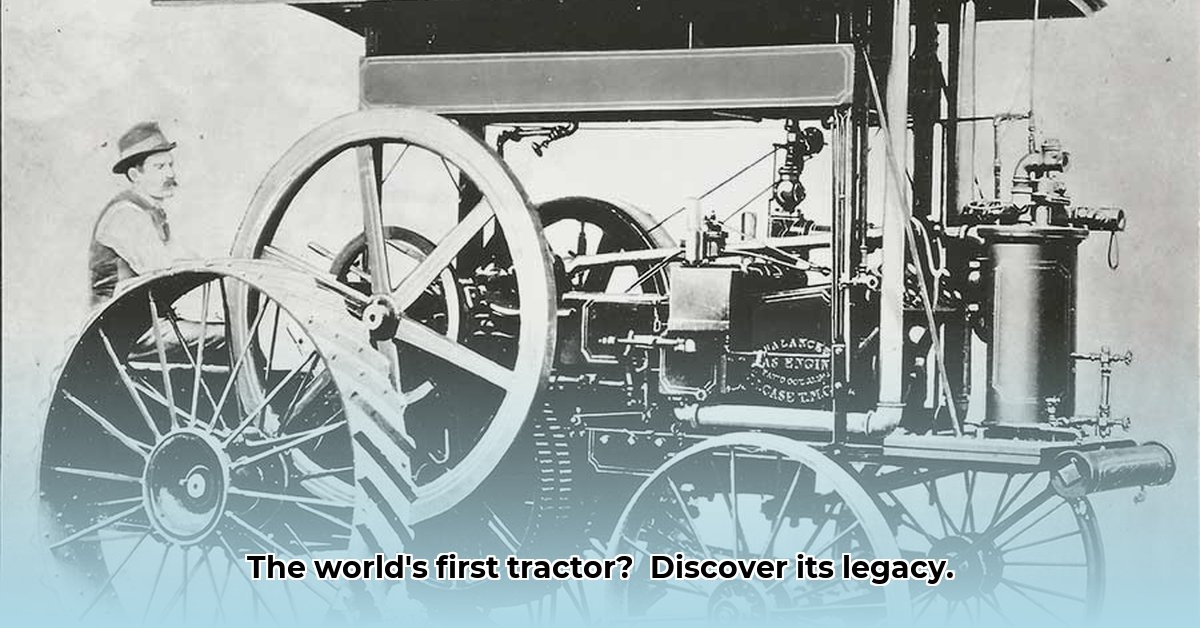
The story of the first tractor isn't a simple "eureka!" moment, but a complex narrative woven from ingenuity, competition, and the undeniable need for a more efficient way to farm. Before we tackle the question of who built the very first one, let's set the stage. The late 19th century saw agriculture wrestling with the limitations of its primary power source: the horse. But could something better be on the horizon? For more in-depth information, check out this comprehensive resource.
The Steam Era: A Giant, Clunky Problem
Imagine farming in the late 1800s. Your primary workhorse wasn't a horse at all, but a massive, unwieldy steam engine. These behemoths, while powerful, were incredibly difficult to manage. Think tons of water and coal to haul across muddy fields, constant boiler breakdowns, and the ever-present danger of explosions. It was backbreaking, dangerous work – a recipe for inefficiency and disaster. Farmers desperately needed a simpler, safer solution. This need became the catalyst for the gasoline tractor revolution. But how did we get there? Was it a linear progression, or a messy, competitive race?
Did you know that early steam tractors required multiple laborers to operate effectively? This highlights the inherent limitations of the technology and the desperate need for improvement.
The Gasoline Gamble: A New Kind of Power
The late 1800s witnessed inventors experimenting with gasoline engines, recognizing their potential for agriculture. The race for a more manageable and powerful farming machine was on, with several inventors vying for a place in history. While John Froelich's 1892 invention is frequently cited as a pivotal moment – a machine that promised less hassle and greater efficiency – was he truly the first? This question sparks considerable debate among historians.
The "First" Tractor: A Matter of Debate
Pinpointing the very first gasoline tractor is surprisingly difficult. Several inventors were concurrently developing similar machines. The Charter Gasoline Engine Company, for instance, likely experimented with early designs as early as 1889. J.I. Case, a name synonymous with agricultural machinery, also played a significant role, with claims of designs dating back to 1892 or 1894. The lack of comprehensive records from that era fuels the ongoing debate. It's a historical puzzle with many missing pieces.
"The scarcity of detailed records makes definitive conclusions challenging," notes Dr. Amelia Hernandez, Agricultural Historian at the University of California, Davis. "Uncovering the truth requires a deeper dive into company archives and oral histories."
Early Tractors: A Rocky Road to Success
These early gasoline tractors faced significant hurdles. Imagine the challenges: unpredictable fuel quality, primitive manufacturing techniques, underpowered and unreliable engines prone to frequent breakdowns, and farmers understandably hesitant to invest in expensive, unproven technology. Sales were slow, as farmers carefully weighed the risks and high upfront costs against the uncertain benefits. This early resistance was a testament to the need for both innovation and a degree of dependability before farmers would invest in these new technologies. But the seeds of a revolution were sown.
The Slow but Steady Climb to Acceptance
The adoption of gasoline tractors wasn't an overnight transformation. Adoption rates varied wildly depending on factors such as labor costs, farm size, and crop profitability. It wasn't solely a matter of technological advancement, but the economic feasibility for the end-user. Only as these machines became more reliable and affordable did they gain wider acceptance. This illustrates a key lesson about technology adoption: innovation isn't enough to ensure success.
More Than Machines: A Societal Shift
The impact of the gasoline tractor extended far beyond the field. It revolutionized farming practices, dramatically improving efficiency and boosting yields. Yet, this progress wasn't without its shadows. Rural communities and agricultural labor markets experienced significant disruption as mechanization displaced human workers, creating both opportunities and challenges. A complete understanding of this period requires acknowledging both the positive and negative consequences. The changes were profound, reshaping society in ways both obvious and subtle.
A Legacy of Ingenuity
The story of the first tractor isn't about a single inventor or a singular moment of genius. It's a collective narrative of countless experiments, failures, breakthroughs, and collaborations that fundamentally altered the landscape of agriculture. Regardless of who deserves the title of "first," their invention launched a revolution that continues to shape our food production systems and the global economy.
Key Players (Approximate Timeline):
| Inventor/Company | Approximate Year of Development | Notes |
|---|---|---|
| Charter Gasoline Engine | ~1889 | Early experiments with gasoline tractor designs. |
| John Froelich | 1892 | Often cited as one of the earliest successful gasoline tractors. |
| J.I. Case | ~1892-1894 | Early designs and significant involvement in gasoline tractor development. |
How Economic Factors Shaped Tractor Adoption
The internal combustion engine's roar, once a novelty, became the soundtrack of agricultural transformation. But this transition wasn't solely driven by technology; it was profoundly shaped by economic realities. How did economic factors influence the early adoption rates of gasoline tractors? The answer lies in a complex interplay of costs, productivity, and the socio-economic landscape of the time.
Did you know that the initial cost of early gasoline tractors often exceeded the value of the entire farm they were intended to serve? This economic hurdle demonstrates just how profound a change their introduction was.
The High Cost of Entry
Early gasoline tractors were expensive, acting as a significant barrier to entry for small-scale farmers. Only larger farms or wealthier farmers could afford this groundbreaking technology, creating an uneven playing field and accelerating the consolidation of farmland. This unequal access created both winners and losers in the early adoption process.
Increased Productivity: A Major Draw
Despite the high upfront costs, the potential return on investment was substantial, given the dramatic increase in productivity offered by the tractor. A single tractor could replace multiple horses and several human workers, leading to significant cost savings in the long run, especially for larger operations. The faster harvest times and increased efficiency equated to more crops and higher profits – a powerful incentive, despite the initial outlay.
Fuel and Maintenance: Ongoing Expenses
It's crucial to remember that the cost savings weren't without their caveats. Farmers also had to consider the persistent expenses of fuel and maintenance. Unlike animal power, which was largely self-sustaining, gasoline tractors demanded continuous investment. This could be a substantial burden, particularly during economic downturns or poor harvests.
The Social and Economic Paradigm Shift
The adoption of gasoline tractors wasn't just an economic change; it fundamentally altered the social fabric of rural communities. Mechanization displaced many farm laborers, creating widespread social and economic disruption. This upheaval resulted in significant migration to urban centers and a fundamental reshaping of rural society. The consequences were far-reaching and multifaceted.
A Lasting Legacy: Sustainability's Ongoing Challenge
The legacy of the gasoline tractor is still with us today. Its impact on productivity is undeniable, yet its reliance on fossil fuels raises critical environmental concerns. Modern sustainable agriculture grapples with how to maintain efficiency while minimizing environmental impact. This ongoing challenge requires innovative solutions to the problems that early tractors helped create.